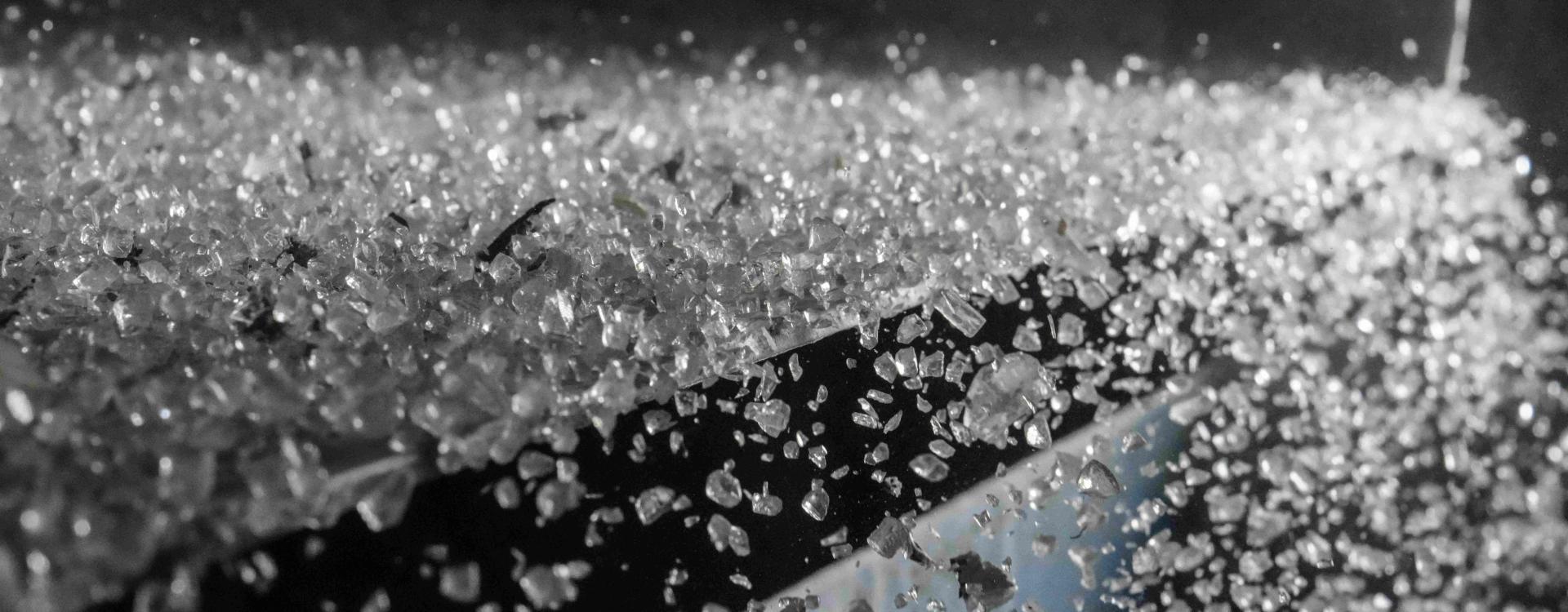
Industrial PV recycling and the efficient reprocessing of end-of-life PV modules
As the photovoltaic sector continues to expand, the recycling of solar modules is also becoming increasingly important. This is because more and more installations will reach the end of their service life in the coming years. One of the benefits of industrial PV recycling is the efficient processing of large quantities of end-of-life PV modules. The aim of forward-looking photovoltaic recycling is to recover valuable raw materials and reintroduce them into the material cycle. Solar panel recycling thus makes an important contribution to the circular economy and the use of resources. PV modules were originally designed for a long service life, even under adverse weather conditions. They are intended to generate electricity reliably for decades whilst withstanding a wide variety of environmental influences. It is precisely this robust construction that poses major challenges for recycling.
Industrial PV recycling to meet the demands of the future
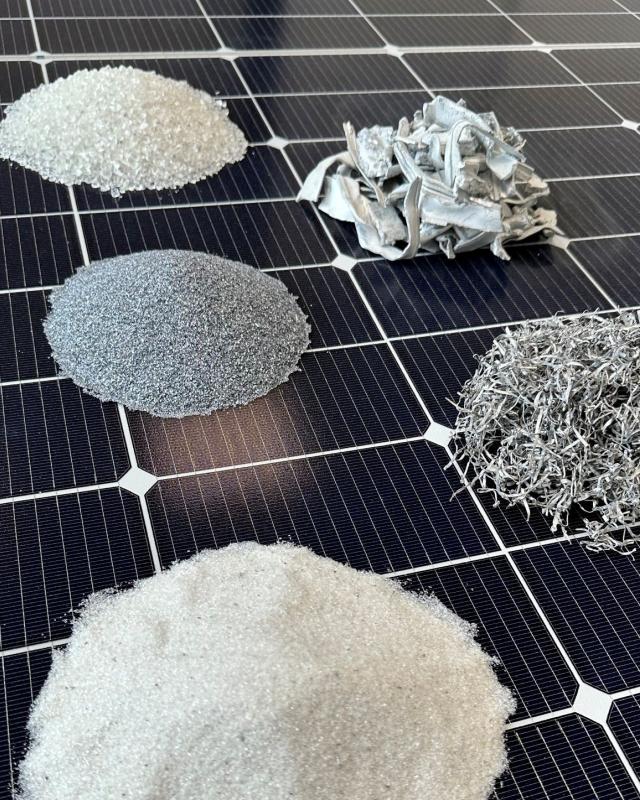
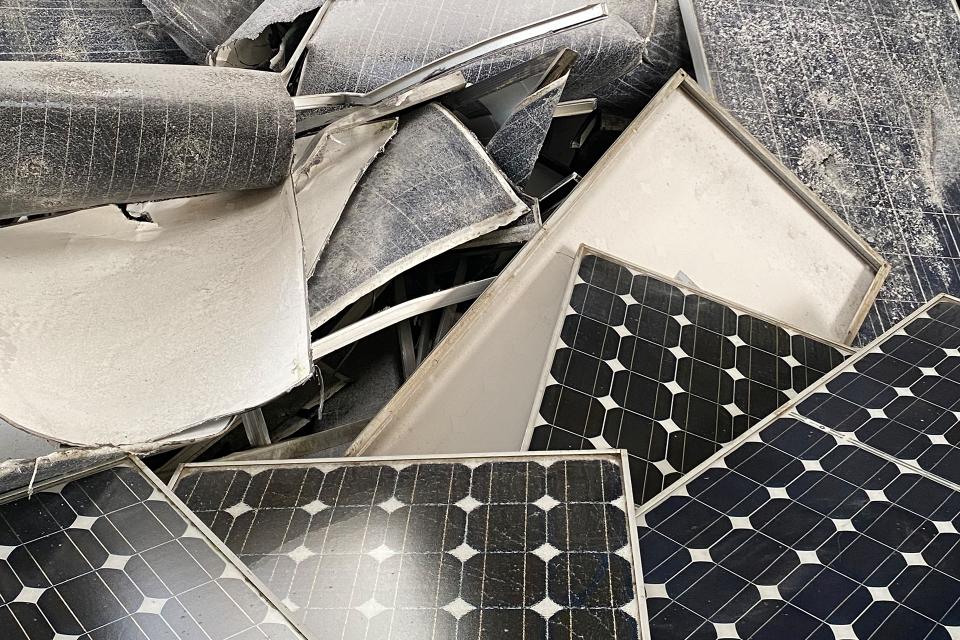
A PV module consists of various materials such as glass, aluminium, tinned copper, silicon and silver, which are bonded together to form a solid composite. The aim of recycling solar modules is to separate these raw materials as cost-effectively as possible and to recover them to a high standard. At the same time, the number of end-of-life PV modules is set to rise significantly in the coming years. According to forecasts, in Germany alone, around 4.3 million tonnes of PV modules will reach the end of their service life by 2050 (IRENA, 2016). Added to this is the wide variety of manufacturers, technologies, sizes and conditions – ranging from intact modules to broken or bent ones.
These challenges call for an industrial, efficient and cost-effective recycling process capable of processing a wide variety of PV modules whilst simultaneously producing high-quality secondary raw materials. Companies, installation firms and solar park operators wishing to dispose of PV modules require high-performance and reliable recycling solutions for this purpose.
Mechanical PV recycling: efficient, scalable and resource-efficient
At Reiling, we rely on a mechanical recycling process developed in-house. In this process, the incoming PV modules are first shredded. The individual material fractions are then separated from one another fully automatically on the basis of their physical properties and discharged – entirely without chemicals and without energy-intensive thermal processes. Our many years of practical experience in PV recycling offer numerous advantages:
1. Industrial recycling process with high scalability
Our mechanical recycling process is designed specifically for industrial volumes and can be scaled flexibly. The PV recycling plant in Münster has a planned capacity of up to 50,000 tonnes of PV modules per year. By 2025, around 16,000 tonnes had already been processed there – and the trend is still rising. We thus offer an efficient solution for companies wishing to dispose of large quantities of solar modules or feed them into the solar module recycling process.
2. Cost-effective and lower energy consumption
High throughput rates and plant technology designed for industrial-scale operations form the basis for a cost-effective recycling process. As the separation process described involves purely mechanical processing, we do not require energy-intensive thermal treatment stages. Our aim is to develop a process that can be operated efficiently and cost-effectively even as volumes continue to grow in the future. At the same time, our process enables the efficient recovery of raw materials from solar modules and, through their use in downstream industries, supports a functioning circular economy.
3. Flexible for a wide variety of PV modules
Whether it’s different module sizes, various technologies or damaged modules following storm or hail damage – our mechanical recycling process handles a wide variety of PV modules without the need for changeover times or complex adjustments to the plant. This ensures continuous, efficient plant operation and a high level of process reliability. This reliability in disposal offers decisive advantages, particularly when disposing of PV modules from decommissioning projects or large ground-mounted installations.
4. High recycling rates and high-quality secondary raw materials
With our mechanical recycling process, we achieve material recycling rates of 80 to 90 per cent – depending on the design of the module type. All key material fractions are recovered and are subsequently available as high-quality secondary raw materials for various downstream industries.
In this way, the recycling of solar modules actively helps to keep glass, aluminium, copper and other recyclable materials in the material cycle in the long term and to conserve primary raw materials in the downstream industries.
Working together to close material cycles
We are constantly refining our mechanical recycling process in order to continuously optimise recycling rates, material quality and processes. In this way, we aim to make a contribution to the circular economy and continue to position ourselves as a reliable partner for industrial PV recycling in the future. Our motivation is clear: to keep valuable raw materials in circulation and to close material cycles. Are you looking to dispose of solar modules or seeking an experienced partner for the recycling of photovoltaic modules? Please get in touch – we’d be happy to advise you.